Category: Gaming Technology

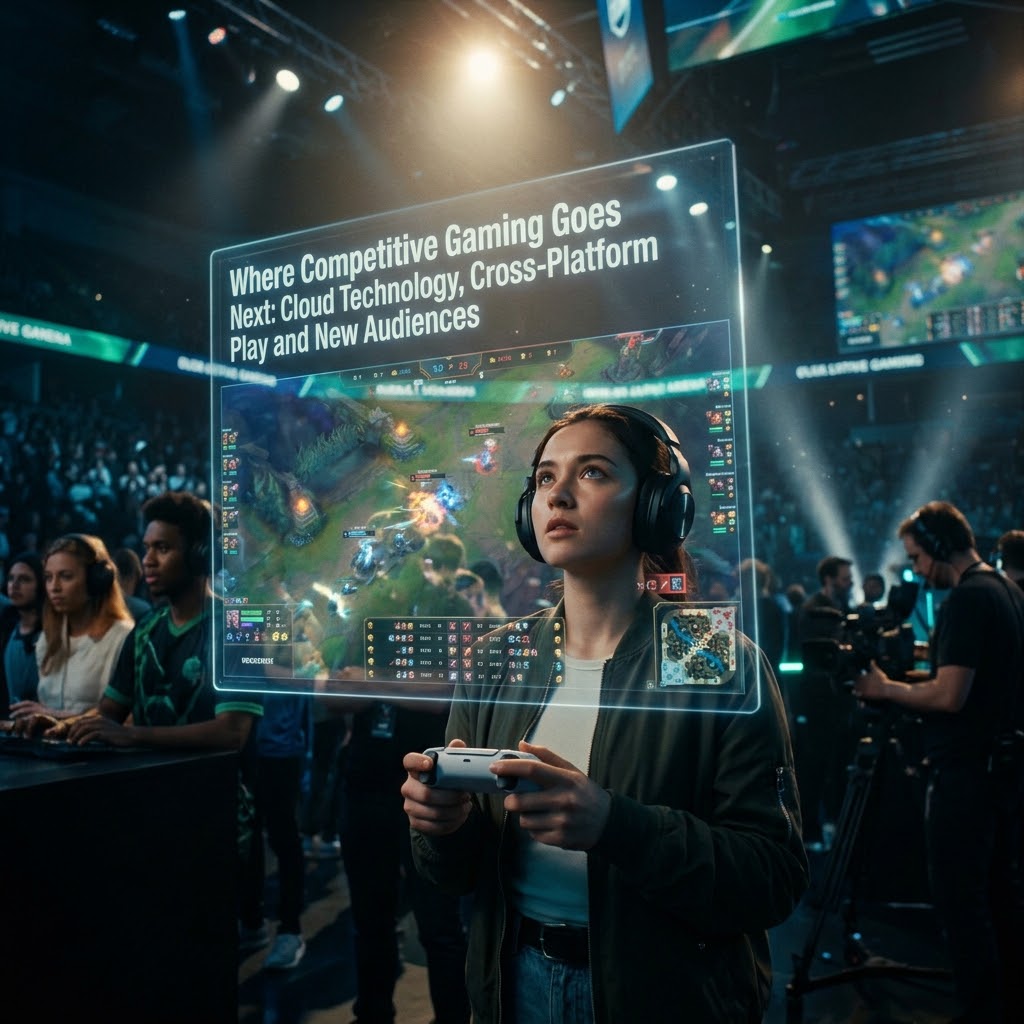
  • Where Competitive Gaming Goes Next: Cloud Technology, Cross-Platform Play and New Audiences

    Where Competitive Gaming Goes Next: Cloud Technology, Cross-Platform Play and New Audiences

    Nine articles into this cluster and a pattern’s been hard to miss: every shift in competitive gaming’s history came down to something getting less locked-down. LAN gave way to online. Regional servers gave way to global ones. PC gave way to mobile as the default entry point for huge parts of the world.

    The next chapter looks like more of the same instinct, just aimed at the last few walls still standing — the ones between platforms, between devices, and increasingly between “playing” and “just watching from a browser tab.”

    The Growing Role of Cloud Technology

    Cloud infrastructure is quietly doing to competitive gaming what regional servers did a decade ago, just one level up. Instead of moving servers physically closer to players, the idea now is moving the actual processing off a player’s device entirely and letting remote infrastructure carry the heavy lifting.

    Game streaming is the visible end of that shift — a player on a modest laptop running something that would normally demand a serious graphics card, because the graphics card isn’t actually theirs.

    It’s sitting in a data center somewhere doing the work and beaming the result back. Server-side processing is the less glamorous engine underneath all of it, and it’s the part that actually determines whether any of this works well enough to compete on.

    Good server-side infrastructure makes cloud gaming feel almost indistinguishable from local hardware. Bad infrastructure makes it feel like exactly what it is: a video stream of someone else’s computer, with all the lag that implies.

    How Cross-Platform Play Changes Competition

    PC, console, and mobile used to be separate universes, mostly because there wasn’t much technical choice in the matter. Now a growing number of titles let players on all three compete in the same lobby, which sounds simple and is anything but.

    Shared communities are the upside, and it’s a real one. A friend group split across a gaming PC, a console, and a couple of phones can actually play together now instead of picking whichever platform the majority owns and leaving someone out.

    That’s genuinely changed how casual groups organize themselves, and it’s starting to reshape competitive scenes too, pulling player bases together that used to be siloed off from each other entirely by nothing more than which device they happened to own.

    The Technical Challenges of Cross-Platform Competition

    Input differences are the obvious sticking point nobody’s fully solved. A mouse and keyboard offer precision a controller or a touchscreen simply can’t match in most genres, and pretending otherwise doesn’t make the gap disappear. Games handling this well usually lean on aim assist or separate matchmaking pools, and neither is a perfect fix.

    Performance varies wildly depending on what device someone’s actually playing on, which raises fairness questions that single-platform competition never had to deal with. Latency compounds this further, especially once cloud gaming enters the mix — a cloud player is fighting an extra layer of network delay that a local PC or console player simply isn’t.

    Balance, in the game-design sense, has to somehow account for all of this at once: different input methods, different performance ceilings, different latency profiles, all competing in the same match and expected to feel roughly fair to everyone involved. It’s a genuinely hard problem, and most current solutions are compromises rather than fixes.

    Cloud Gaming and the Hardware Barrier

    Lower hardware requirements are cloud gaming’s clearest pitch. If the processing happens elsewhere, the device in front of you barely matters anymore, and that changes who can realistically compete at a high level regardless of what they can afford to own.

    Accessibility follows directly from that shift, in theory opening serious competitive gaming to anyone with a stable connection instead of anyone who can afford a decent PC. In practice, infrastructure dependency cuts the other way just as hard. Cloud gaming is only as good as the network carrying it, which means the barrier hasn’t actually disappeared.

    It’s just moved from “can you afford a gaming PC” to “does your area have internet good enough to make cloud gaming viable,” and depending on where someone lives, that second question can be just as hard to answer yes to as the first one ever was.

    New Audiences for Competitive Gaming

    Mobile-first players keep arriving in numbers PC-first scenes never quite matched, and a lot of them are entering competitive gaming for the first time through a phone rather than migrating over from PC or console. That’s a genuinely different pipeline than the one older esports scenes were built around.

    Casual viewers make up a bigger share of the audience than a lot of hardcore fans probably want to admit, watching for personalities and highlight moments rather than deep strategic understanding of whatever’s actually happening on screen.

    New regions keep entering the picture too, often through mobile specifically, since it sidesteps the cost and infrastructure barriers that used to keep certain markets out of competitive gaming almost entirely. None of these audiences look much like the LAN-cafe crowd this cluster started with.

    That’s not a criticism. It’s just a different set of people finding their way into competitive gaming through a completely different door.

    The Continued Importance of Live Streaming

    Streaming platforms remain the backbone connecting all of this, regardless of what device someone’s playing on or which region they’re watching from. A tournament happening anywhere can reach an audience everywhere, and that hasn’t stopped being true even as the technology carrying it keeps evolving underneath.

    The creator ecosystem keeps growing alongside official tournament coverage, often pulling in viewers who’d never seek out a bracket directly but will absolutely watch a creator they already follow react to one.

    Interactive audiences push this further than passive viewership ever could — live chat, polls, prediction features, all the small mechanics that turn watching into something that feels more like participating. That interactivity is arguably doing more to hold casual viewers in the audience long-term than raw production quality ever will.

    Will Browser Technology Become More Important?

    HTML5 has quietly gotten good enough to run genuinely demanding games directly in a browser tab, no download, no install, no waiting. That’s a bigger deal than it sounds, especially for anyone trying to reach players who won’t commit to installing something before they’ve even decided if they like the game.

    Web-based gaming lowers the barrier to trying something new about as far as it can go. Accessibility improves accordingly — anyone with a browser and a decent connection is a potential player, full stop, no platform gatekeeping required. Instant play might end up being the real disruptor buried in all of this, more than cloud gaming or cross-platform ever turns out to be.

    A game you can try in ten seconds from a link someone shared has a completely different growth curve than one that requires a download, an account, and a commitment before a player’s even seen thirty seconds of actual gameplay.

    What Competitive Gaming Might Look Like Next

    More connected ecosystems seem like the obvious direction, tying platforms, regions, and audiences together in ways that used to be technically impossible rather than just inconvenient. Cross-platform competition will probably keep expanding, unevenly and with plenty of unresolved fairness debates along the way, but expanding nonetheless.

    Hybrid online and LAN events, the model this cluster already covered as the current standard, will likely keep being the answer rather than either format fully winning out over the other. Online for reach and scale.

    LAN for the moments that actually deserve a crowd in the room. New competitive formats will probably keep emerging too, shaped by whatever platform or technology happens to be expanding fastest at the time, the same way objective-based modes reshaped competitive shooters or point systems reshaped battle royale.

    The future of competitive gaming infrastructure probably isn’t going to come down to one platform beating all the others. It’s going to come down to fewer walls standing between the platforms, regions, and audiences that used to be separate by necessity and are increasingly separate by nothing more than habit.

    Ten years from now, someone writing the next version of this cluster will probably be describing a landscape where the question “PC or mobile or console” barely makes sense anymore, because the answer will just be all three, at once, in the same match.

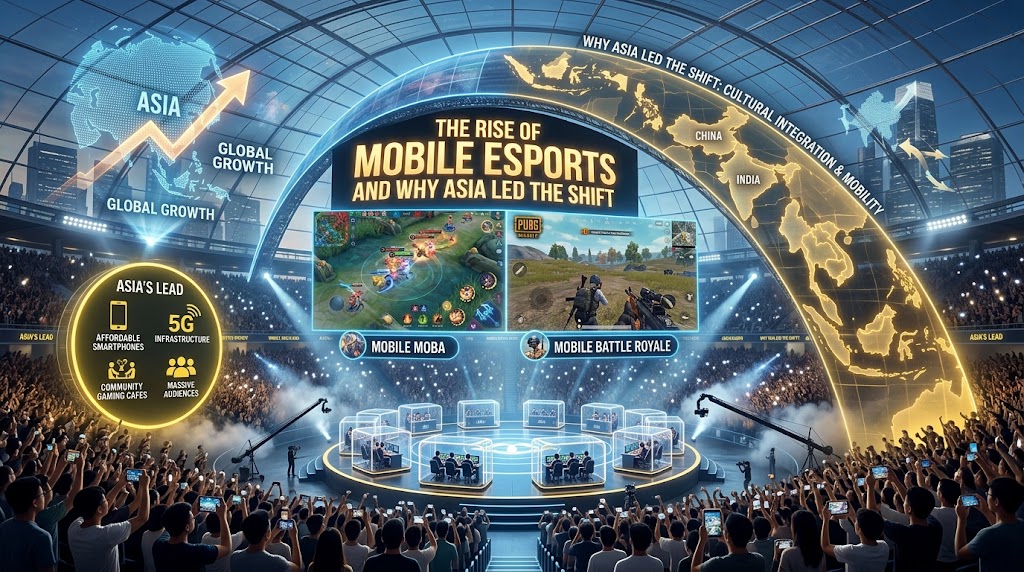
  • The Rise of Mobile Esports and Why Asia Led the Shift

    The Rise of Mobile Esports and Why Asia Led the Shift

    There’s still a certain kind of gamer who hears “mobile esports” and pictures someone tapping a screen between subway stops, not a professional athlete.

    Fair reaction a decade ago. Not anymore. In several of the biggest gaming markets on the planet, mobile isn’t the casual tier underneath “real” competitive gaming. It’s the main event, and it got there faster than most people watching from the PC side ever expected.

    Why Mobile Changed Gaming Accessibility

    Smartphones being everywhere isn’t really the interesting part — phones were going to be everywhere regardless, since people needed them for calls and messaging long before anyone cared whether they could run a competitive shooter.

    Gaming just got to ride along on infrastructure built for entirely different reasons.

    Cost is where this actually bites. A decent gaming PC is real money. A console isn’t far behind once you add games and a controller or two. A phone that runs competitive mobile titles well costs a fraction of either, and for a lot of players, the choice was never mobile versus PC. It was mobile versus nothing.

    Add portability on top — no desk required, no fixed setup, no monitor — and you’ve removed most of the practical friction PC and console gaming never fully got rid of.

    Why Asia Became an Early Leader

    Smartphone adoption ran ahead of the curve across large parts of Asia, and a decent chunk of the explanation is that a lot of the region skipped the desktop-computing phase Western households went through in the 90s and 2000s entirely.

    For plenty of players here, the phone wasn’t a second device. It was the first computer they ever owned, full stop.

    That produced genuinely mobile-first markets — places where a smartphone was the default gaming platform from day one rather than a downgrade from something better. And the gaming culture was already sitting there waiting for it. Internet café habits, local tournament traditions, years of community internet infrastructure built around other platforms — none of that had to be invented for mobile. It just needed a cheaper, more accessible device to run on, and mobile handed it one.

    The Evolution From Mobile Gaming to Mobile Esports

    Getting competitive modes right on mobile took longer than it did on PC, and touch controls are a big reason why. Early attempts at “competitive” mobile games often amounted to slapping a leaderboard onto something that was otherwise built for casual play, which isn’t the same thing at all.

    Ranked systems changed the equation once they actually worked — a real climb, a real fall, tied to real performance instead of just play time. That gave the competitive instinct that had always existed in these communities somewhere to actually point itself. Tournaments followed from there, and honestly the trajectory rhymes with how LAN scenes started decades earlier: informal community brackets first, then real production value and real money once it was obvious there was a genuine skill hierarchy worth putting on a stage.

    Designing Games for Competitive Mobile Play

    Touch controls forced problems onto developers that PC and console teams simply never had to deal with. No physical feedback. No buttons you can find by feel without looking. Developers had to invent control schemes from scratch instead of just adapting something that already worked on another platform.

    Shorter matches ended up being less a compromise than an actual advantage once developers stopped fighting it. People play mobile in shorter windows, generally, so match lengths built around that reality made these games more approachable without gutting the strategy underneath.

    Interface design had to compress a lot of information onto a screen that’s nowhere close to a 27-inch monitor, which forced smarter UI decisions than PC ever really had to bother with.

    And performance had to hold up across an enormous range of device price points — competitive integrity falls apart fast if the game only runs well on whatever phone costs $1,200.

    The Growth of Mobile Esports Communities

    Amateur tournaments spread fast once mobile proved it could support real competition, and a lot of them ran through the game’s own in-app systems rather than needing separate infrastructure the way early PC tournaments always did.

    Local events kept the grassroots side alive even as things scaled up — malls, university campuses, telecom-sponsored activations, anywhere that made showing up easy for someone who’d never been to a dedicated gaming venue in their life.

    Professional teams eventually grew out of the strongest amateur talent, following roughly the same arc PC esports did, just compressed into a much shorter timeframe. Mobile titles didn’t have decades to slowly build professional structures. They basically had to speed-run it.

    How Mobile Changed the Esports Audience

    Younger audiences gravitated here specifically because a phone is often the first gaming device someone owns, well before a PC or console shows up. That’s produced a noticeably different demographic than some of the older, more entrenched PC scenes.

    Reach expanded too, into regions that never built strong PC or console markets because the cost or infrastructure never lined up. Mobile handed those regions a real path into competitive gaming that simply didn’t exist before.

    Viewing habits shifted as a side effect — watching on the same device you play on changes what content actually works, how long a stream should run, how everything gets packaged compared to a PC audience watching on a completely separate screen.

    Mobile vs PC Competitive Gaming

    Hardware is the obvious contrast, but it’s not really a story of mobile being the lesser platform. PC wins on raw power and customisation.

    Mobile wins on the fact that almost everyone already owns one regardless of whether they care about gaming at all.

    Controls diverge completely — touchscreen versus mouse and keyboard or a controller — and that shapes which genres actually translate well to each platform rather than making one control scheme flatly better than the other.

    Mobile clearly wins on accessibility. PC still tends to win on precision for genres that genuinely need it. Match duration usually runs shorter on mobile too, part by design and part just reflecting how and where people actually play on a phone.

    Neither platform is a worse version of the other. They’re built for different constraints, and honestly they’re often not even competing for the same players in the first place.

    The Future of Mobile Competitive Gaming

    5G is chipping away at the latency gap that’s kept some mobile titles feeling less responsive than their PC counterparts, which matters most in genres like competitive shooters where reaction time is basically the whole game.

    Cross-platform play is starting to blur mobile and PC together, letting people on different devices share the same matches — which raises a fairness question nobody’s fully settled given how different the controls actually are.

    Cloud gaming could eventually strip hardware limitations out of the picture almost entirely, letting a mid-range phone run something demanding by shifting the actual processing somewhere else. None of this is fully resolved, but that is the future of competitive gaming.

    Mobile esports is probably going to keep shifting shape for a while yet. But the idea that mobile is a stepping stone toward “real” esports feels increasingly out of date. For a huge and growing share of competitive gaming, it already is the real thing.

  • How Better Internet Infrastructure Changed Competitive Gaming Across Asia

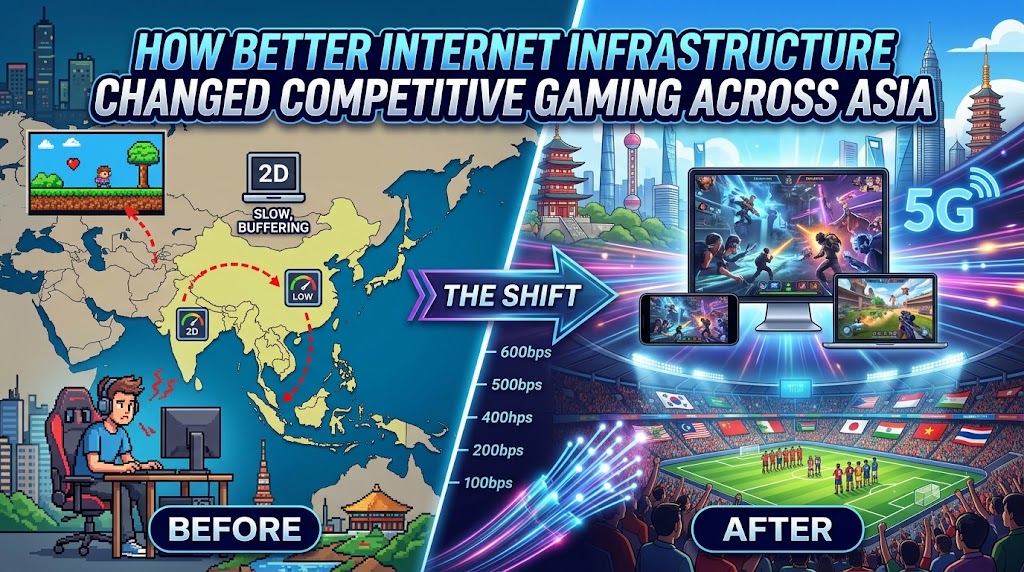
    How Better Internet Infrastructure Changed Competitive Gaming Across Asia

    Nobody cheers for a server. When a team wins a tournament, the highlight reel shows the clutch play, not the data center that made it possible without a hitch. But ask any player who competed through the dial-up era and they’ll tell you the infrastructure was the actual story half the time — matches decided less by skill than by whose connection happened to hold up that day.

    Why Latency Matters

    Ping is the number everyone complains about, but what it actually measures is simple: how long it takes a signal to travel from your machine to the server and back. Lower is better, and the difference between 20ms and 150ms isn’t subtle once you’re playing anything that requires split-second reactions.

    Response time compounds on top of that raw ping figure. Your input has to travel to the server, get processed, and come back before you see the result on screen, and every extra millisecond in that round trip is a millisecond where the game state on your screen and the actual game state have quietly drifted apart. Server distance is usually the biggest lever affecting all of this. A player in Jakarta connecting to a server in Los Angeles is fighting geography as much as their opponent, and no amount of individual skill fully compensates for a connection that’s physically routing halfway around the planet and back.

    The Early Limitations of Online Gaming

    Dial-up internet made competitive online play borderline unworkable for anything demanding real-time precision. Connections that maxed out around 56 kilobits per second simply couldn’t carry the kind of fast, continuous data exchange that competitive multiplayer needs to feel responsive.

    Unstable connections made things worse on top of already-slow speeds. Dropped packets, sudden disconnects mid-match, connections that worked fine for an hour and then inexplicably fell apart — none of this was rare, and tournament organizers in the early 2000s built entire contingency plans around the assumption that someone’s connection would fail at some point during the event. Limited bandwidth capped how much data could move at once regardless of latency, which meant even players with decent ping still dealt with visual stutters and inconsistent performance whenever a match got genuinely intense. Competitive online and lan gaming in this era worked more as a proof of concept than a reliable format.

    Broadband Changed Multiplayer Gaming

    Broadband didn’t just make things faster. It made them consistent, which mattered just as much if not more. Faster connections cut down the raw latency numbers, but the bigger shift was that connections stopped randomly failing mid-session the way dial-up regularly did.

    More stable sessions meant tournaments could actually plan around online play instead of treating it as a fallback for when LAN wasn’t feasible. Larger communities followed almost immediately once that reliability was in place. Players who’d never had access to a LAN cafe, or who lived somewhere without a local competitive scene at all, could suddenly compete online at a level that felt fair rather than handicapped by their connection. That expansion of who could realistically compete is arguably broadband’s biggest long-term contribution to competitive gaming, bigger than the raw speed improvement itself.

    The Expansion of Regional Game Servers

    Local servers solved a problem broadband alone couldn’t fix. Even with a fast connection, a player routing to a server on the other side of the world was still stuck with geography-driven latency that no amount of bandwidth improvement would fully erase.

    Regional servers changed that equation by putting infrastructure physically closer to where players actually were. A data center in Singapore serving Southeast Asian players cuts out thousands of kilometers of unnecessary travel time compared to routing everyone through a server built primarily for a North American or European player base. Lower latency followed directly from that proximity, and the difference wasn’t marginal — players who’d been competing at a structural disadvantage for years suddenly found themselves on genuinely even footing with opponents from regions that had always had better server access.

    Mobile Connectivity Changed the Equation

    4G networks did for mobile gaming roughly what broadband did for PC gaming a decade earlier, and the timing mattered enormously for a region where mobile was already becoming the dominant gaming platform. Suddenly competitive mobile titles could actually function at a level serious enough to support real tournaments, not just casual play.

    5G is pushing further still, chipping away at the specific latency issues that used to make competitive mobile gaming noticeably less responsive than PC or console play. Mobile esports grew directly out of this connectivity improvement — games like Mobile Legends and PUBG Mobile built massive, genuinely serious competitive scenes across Southeast Asia specifically because the mobile networks finally got good enough to support real-time competition reliably, not just casual matches where an occasional lag spike didn’t much matter.

    Infrastructure and Cross-Border Competition

    Players from different countries connecting to the same server or the same tournament bracket introduces a fairness question that a single-country tournament never has to deal with. Whoever’s geographically closer to wherever the server is hosted gets a built-in latency advantage that has nothing to do with skill.

    Regional tournaments have had to account for this directly, sometimes rotating server locations between events or working with organizers to pick neutral hosting that doesn’t systematically favor one country’s players over another’s. Online qualifiers face the same challenge in a more distributed way, since qualifying rounds often can’t guarantee every competitor is playing under identical network conditions the way a single LAN venue would. It’s a problem infrastructure keeps chipping away at, but it hasn’t fully disappeared, and probably won’t until server distribution gets a lot more even across the whole region than it currently is.

    Why Infrastructure Is Part of Competitive Fairness

    Latency differences between competitors aren’t just a technical footnote. They’re a fairness issue on the same level as game balance or matchmaking integrity, even though they get talked about far less. A player with a 20ms advantage over their opponent has a real edge in any game where reaction time matters, regardless of how skilled both players actually are.

    Connection stability factors in just as heavily. A player whose connection drops mid-match, even briefly, can lose a game they were otherwise winning through no fault of their own skill or strategy. Server reliability ties both of these together at the infrastructure level — a tournament built on unreliable servers puts every competitor at the mercy of technical issues that have nothing to do with who’s actually better at the game, which undermines the entire premise of the competition being decided on merit.

    What’s Next: Edge Computing and Cloud Technology

    Edge servers are pushing the “put infrastructure closer to players” logic even further than regional servers already have, distributing computing resources across many more physical locations rather than just a handful of major regional hubs. The goal is shrinking that remaining distance-driven latency gap even for players outside major cities.

    Cloud gaming is trying to solve a different but related problem: removing hardware as a barrier entirely by shifting the actual processing off a player’s device and onto remote servers. It’s a promising idea that’s still constrained by exactly the infrastructure challenges this whole article has been about — cloud gaming is only as good as the connection carrying it, and that connection still needs to be fast and stable enough to not introduce the very latency problems the technology is meant to eliminate. Reduced latency is the throughline connecting all of this. Every infrastructure shift over the past two decades, from broadband to regional servers to mobile networks to whatever edge computing eventually becomes, has been chasing the same basic goal: get the gap between a player’s action and the game’s response as close to zero as physically possible. Competitive gaming across Asia has been shaped by that pursuit as much as by any player, team, or tournament that gets the credit for how far the scene has come.