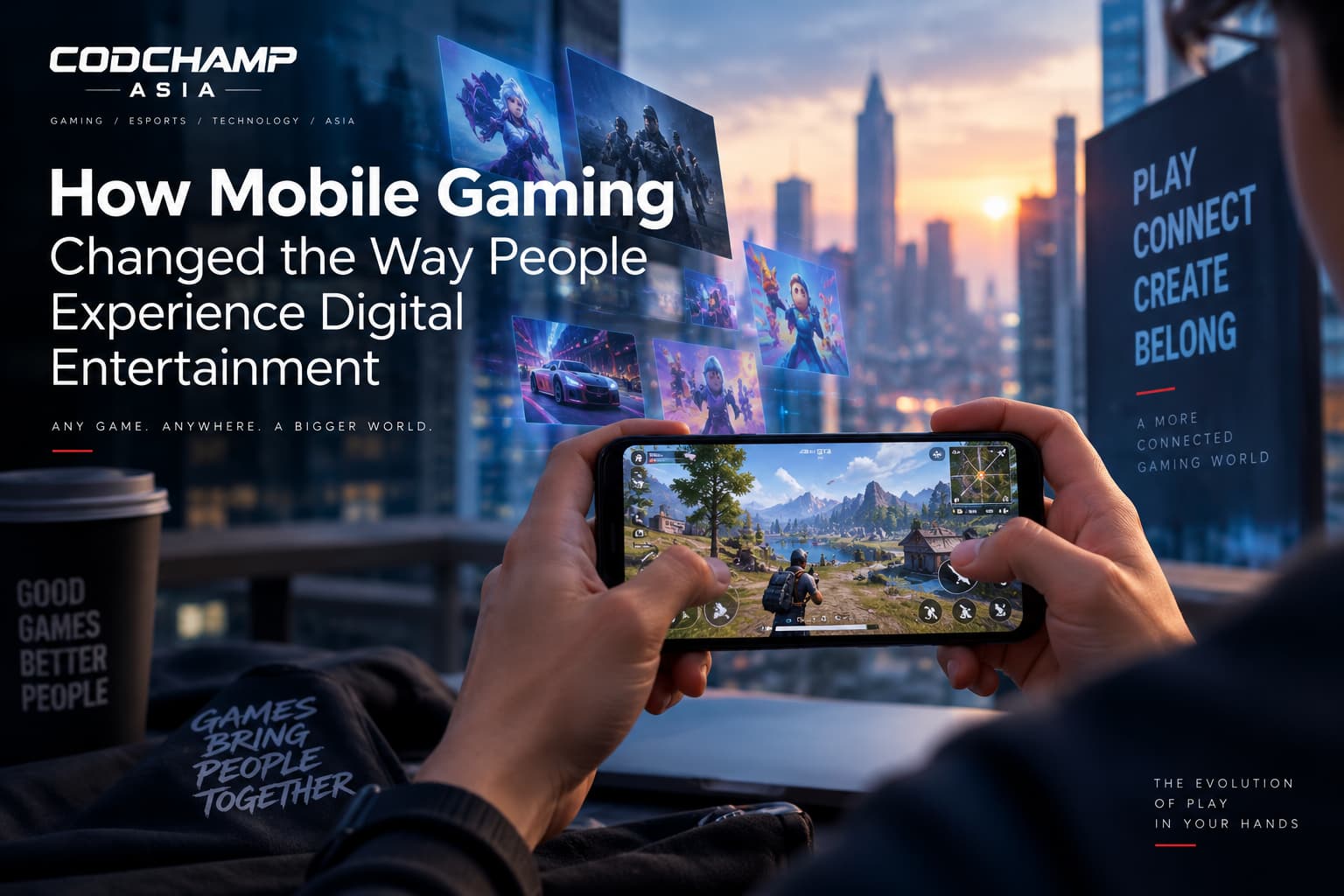
Gaming used to need a box. A console wedged under the TV, a PC that ate half a desk, something you had to plug in and power up before any of it worked.
Check your pocket. There’s probably a full game library sitting in there right now, and you likely stopped thinking of it as remarkable years ago. That shift did more than shrink games down to fit a smaller screen — it rewired who plays, when they play, and honestly what “gaming” even means to most people under thirty at this point.
From Dedicated Hardware to Gaming in Your Pocket
For a long time, PC and console basically were gaming. Hardware first, then the game itself, then usually a room set aside just to sit and play it in.
Smartphones didn’t upgrade that model. They skipped it. You already own the device. Nobody bought a phone to game on it specifically, and yet here we are, with mobile outselling everything else in the industry combined most years now.
That killed the biggest barrier gaming ever had. And portability finished the job — gaming stopped being an event you scheduled and turned into something you slot into whatever fifteen minutes happen to be free. Not just where people play changed. How often changed too, and that’s arguably the bigger shift.
Why Smartphones Expanded the Gaming Audience
Start with the boring answer: cost. A phone runs a fraction of a gaming PC’s price, and you’re buying one regardless, for calls and messages and everything else that has nothing to do with games.
Then there’s sheer numbers. Billions of people already carry a smartphone. Way fewer own a console, or a PC that can actually run something modern without chugging.
That gap didn’t just add players. It split gaming into two audiences that barely existed before at this scale — someone killing five minutes on the bus, and someone who plays for hours a day but happens to do it on a phone instead of a rig. In plenty of emerging markets, mobile wasn’t even a second option. It was the first gaming device most people ever held, full stop, no console or PC detour required.
The Rise of Mobile-First Game Design
Touchscreen controls forced a real redesign. Not a shrink-to-fit job — an actual rethink, because you don’t have a controller’s buttons or a mouse’s precision, and pretending a phone screen could just imitate a gamepad never really worked.
Even orientation became a design choice instead of a default. Hold your phone one way and you get a different interface, sometimes a wildly different genre, than you’d get holding it the other way.
Everything else followed from the same constraint. Shorter sessions, simpler UI, because a six-inch screen just can’t carry what a monitor can. And battery life turned into a real design limit too — a game that drains your phone in twenty minutes doesn’t survive a second play session, no matter how good it looks.
Why Short Gaming Sessions Became More Important
Think about where you actually play mobile games. A commute. A waiting room. The ten minutes before a meeting starts.
None of those moments fit a ninety-minute session. So developers built matches and levels that respect the interruption instead of fighting it.
Session design became its own discipline. Quick progression, matches you can finish in a few minutes, save points that don’t punish you for closing the app mid-level. But don’t confuse short sessions with casual gaming. Plenty of mobile titles run deep, competitive systems inside a five-minute match. Short doesn’t mean shallow.
Mobile Gaming Became a Social Experience
Multiplayer on mobile isn’t a bonus feature anymore. It’s often the entire point. You’re not just playing a game, you’re playing with your friends, your clan, your regular squad from the same server.
Communities built up around specific titles the same way they always have, just faster, because a phone-based community doesn’t need anyone to own expensive hardware to join in.
Live events and streaming tie all of this together. You can watch mobile esports the same way you’d watch any other competitive scene, and that audience keeps growing alongside the games themselves.
Better Connectivity Changed What Mobile Games Could Do
None of this works without the network underneath it. 4G made real-time multiplayer on mobile actually viable. 5G is pushing that further, cutting the latency gap that used to separate mobile from PC and console.
Broadband improvements off the phone itself matter too, since a lot of mobile gaming still happens over home Wi-Fi rather than cellular data. And cloud services are starting to let phones run games they’d never handle on their own hardware, shifting the heavy processing somewhere else entirely.
You can read more about how internet infrastructure reshaped competitive play across the region here.
Mobile Gaming and the Wider Digital Entertainment Ecosystem
Mobile gaming doesn’t sit in its own lane anymore. It overlaps constantly with streaming, social media, and the creator economy built around all of it.
You might discover a game through a creator’s clip before you ever download it yourself. You might keep playing partly because a community exists around it on social media, not just because the gameplay itself pulls you back.
That overlap is the bigger story here. Gaming, streaming, and social platforms are converging into one connected entertainment space, and mobile is usually the device carrying you between all three without you ever putting your phone down.
What Mobile Gaming Means for the Future
Cross-platform play keeps blurring the line between mobile, PC, and console, letting you compete against people regardless of what device they’re holding. That shift is already reshaping competitive gaming, and you can see where it’s heading in more detail here.
Cloud gaming could remove hardware limits from mobile almost entirely, letting your phone run something far beyond what its own chip could manage alone.
Mobile hardware itself keeps improving too, closing the performance gap with dedicated gaming devices year over year. Competitive scenes built on mobile keep growing alongside all of it, and new audiences keep arriving through a device most of them already had in their pocket before they ever thought of themselves as a gamer.
Mobile gaming didn’t just move games onto a smaller screen. It changed where you play, when you play, how you play, and increasingly, why you play at all.
Leave a Reply